Introduction
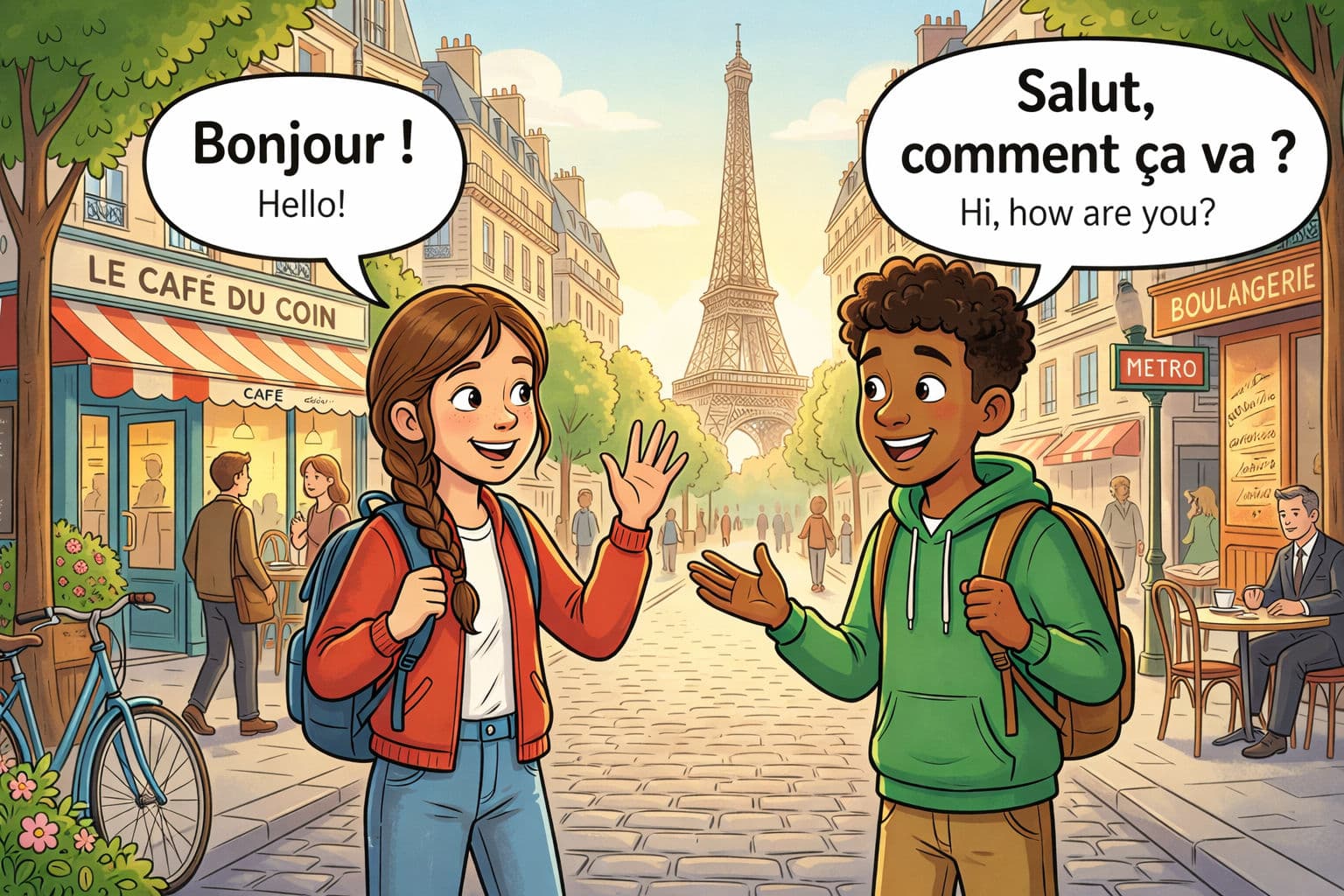
When you start learning French, the first and most important topic is greetings. Greetings are used in every conversation. In French-speaking countries, greeting someone is not optional — it is considered polite and respectful. If you start speaking without greeting, it can be seen as rude. So learning greetings is the first step to learning French.
1. Bonjour – Hello
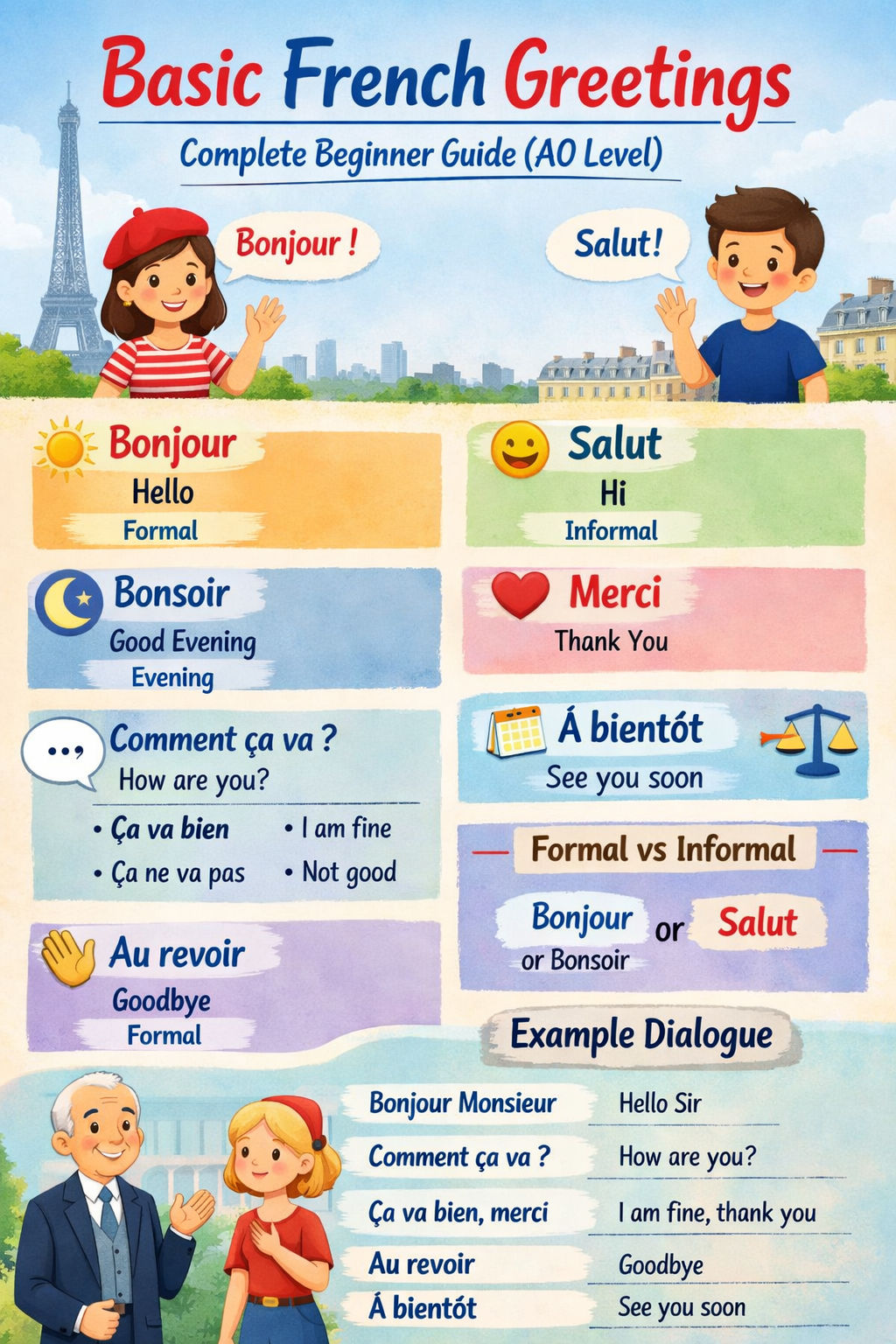
Bonjour means Hello or Good morning.
You can use Bonjour:
In the morning
In the afternoon
In formal situations
With teachers, strangers, elders, in shops, in offices
Examples:
Bonjour Madame (Hello Madam)
Bonjour Monsieur (Hello Sir)
Bonjour Paul (Hello Paul)
Important: Always say Bonjour before starting a conversation.
2. Bonsoir – Good Evening
Bonsoir means Good evening.
Use Bonsoir after evening time (usually after 6 PM).
Examples:
Bonsoir Madame
Bonsoir Monsieur
Bonsoir Paul
3. Salut – Hi (Informal)
Salut means Hi.
This is informal, so use it only with:
Friends
Classmates
People your age
Family members
Do NOT use Salut with:
Teachers
Boss
Unknown people
Formal situations
Example:
Salut Marie
Salut Paul
4. Comment ça va ? – How are you?
To ask someone how they are, you say:
Comment ça va ? = How are you?
Possible answers:
Ça va bien = I am fine
Ça va = I am okay
Comme ci, comme ça = So-so
Ça ne va pas = Not good
Example conversation:
Bonjour Paul !
Bonjour Marie !
Comment ça va ?
Ça va bien, merci. Et toi ?
Ça va bien !
5. Merci – Thank You
Merci means Thank you.
Examples:
Merci beaucoup = Thank you very much
Merci Madame = Thank you Madam
Merci Paul = Thank you Paul
6. Au revoir – Goodbye
Au revoir means Goodbye.
This is formal and polite.
Examples:
Au revoir Madame
Au revoir Monsieur
Au revoir, à demain (Goodbye, see you tomorrow)
7. À bientôt – See You Soon
À bientôt means See you soon.
Other similar expressions:
À demain = See you tomorrow
À plus tard = See you later
Bonne nuit = Good night
8. Formal vs Informal Greetings
SituationGreetingTeacherBonjourFriendSalutShopBonjourOfficeBonjourEveningBonsoirLeavingAu revoirFriend leavingSalut / À bientôt
9. Mini Dialogue (Example Conversation)
French Conversation:
Bonjour Monsieur
Bonjour Marie
Comment ça va ?
Ça va bien, merci
Au revoir
À bientôt
English Translation:
Hello Sir
Hello Marie
How are you?
I am fine, thank you
Goodbye
See you soon
10. Common French Greetings Vocabulary
FrenchEnglishBonjourHelloBonsoirGood eveningSalutHiComment ça va ?How are you?Ça va bienI am fineMerciThank youAu revoirGoodbyeÀ bientôtSee you soonMonsieurSirMadameMadam
11. Practice Exercise
Fill in the blanks:
______ Marie ! (Hi Marie)
______ Madame ! (Hello Madam)
Comment ça va ? → ______ (I am fine)
______ = Thank you
______ = Goodbye
Answers:
Salut
Bonjour
Ça va bien
Merci
Au revoir
12. Conclusion
Greetings are the first step to speaking French. If you learn these greetings and practice them daily, you will be able to start a basic conversation in French. Try to practice small conversations like:
Bonjour
Comment ça va ?
Ça va bien
Merci
Au revoir
Practice these every day and you will improve very fast.
Next Lesson Recommendation: French Alphabet (A, B, C in French)